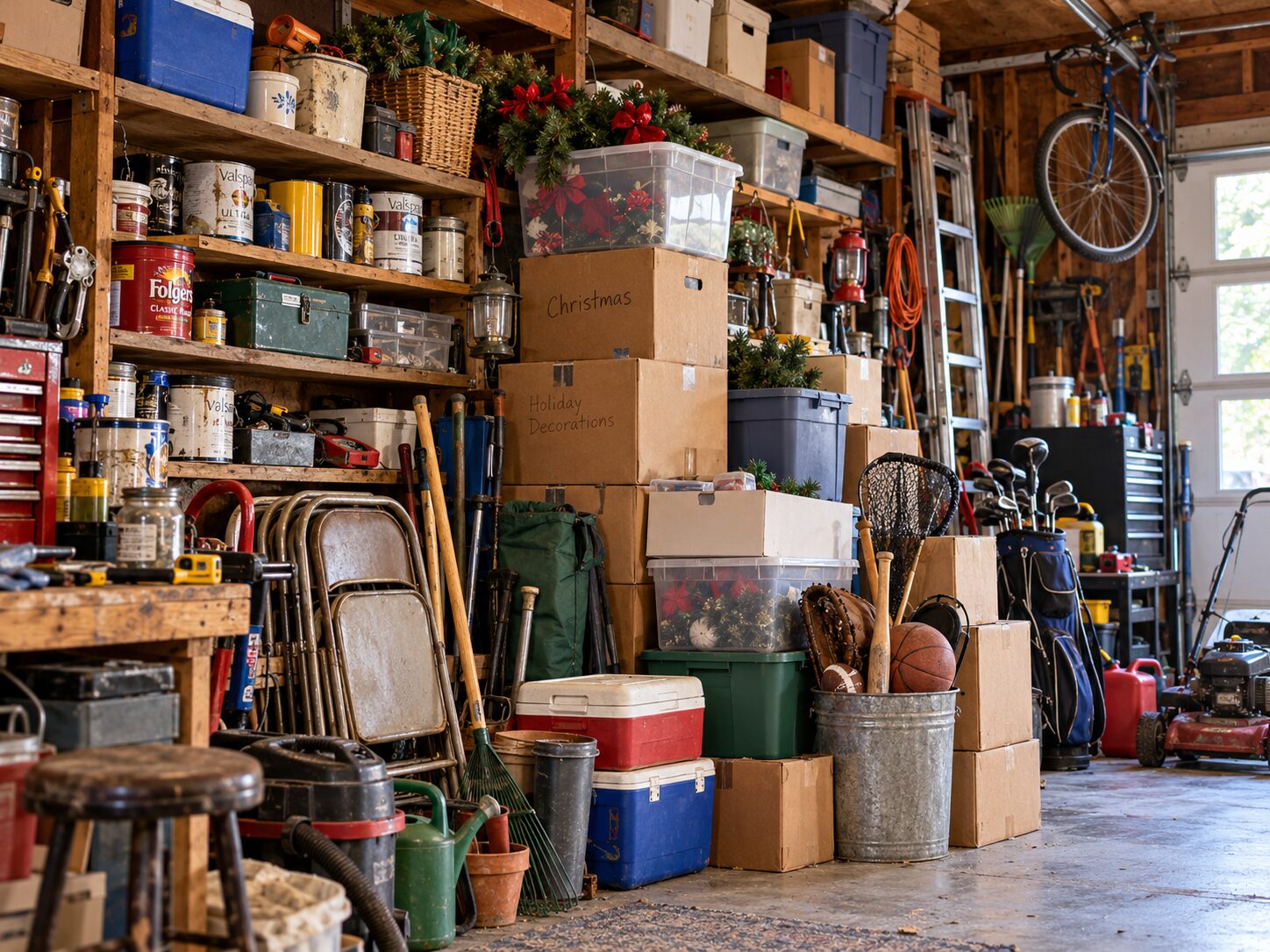
Images in this article are AI-generated illustrations, not client property photographs.
Open a closet or garage in a house that’s been lived in for 30 or 40 years and you may find yourself wondering, “Where on earth do we start?”
Maybe it’s boxes of holiday decorations. Maybe it’s your parents’ good china nobody ever used. Or maybe it’s an entire collection of baby food jars, screwed to a board in Grandpa’s garage, each filled with nails, nuts, bolts and washers.
You laugh because you’ve seen it. But for a lot of families, clearing out a house is anything but funny.
Whether you’re helping a parent move, sorting out a loved one’s home, or simply trying to make your own place easier to live in, you don’t have to decide what happens to every last thing in one weekend. And you may not need to get rid of nearly as much as you think before selling.
Why we hang on to things
Many of us Boomers grew up with parents or grandparents who had lived through the Depression. When money was tight, you repaired things instead of replacing them. You kept leftover hardware. You saved containers because surely they’d be useful someday.
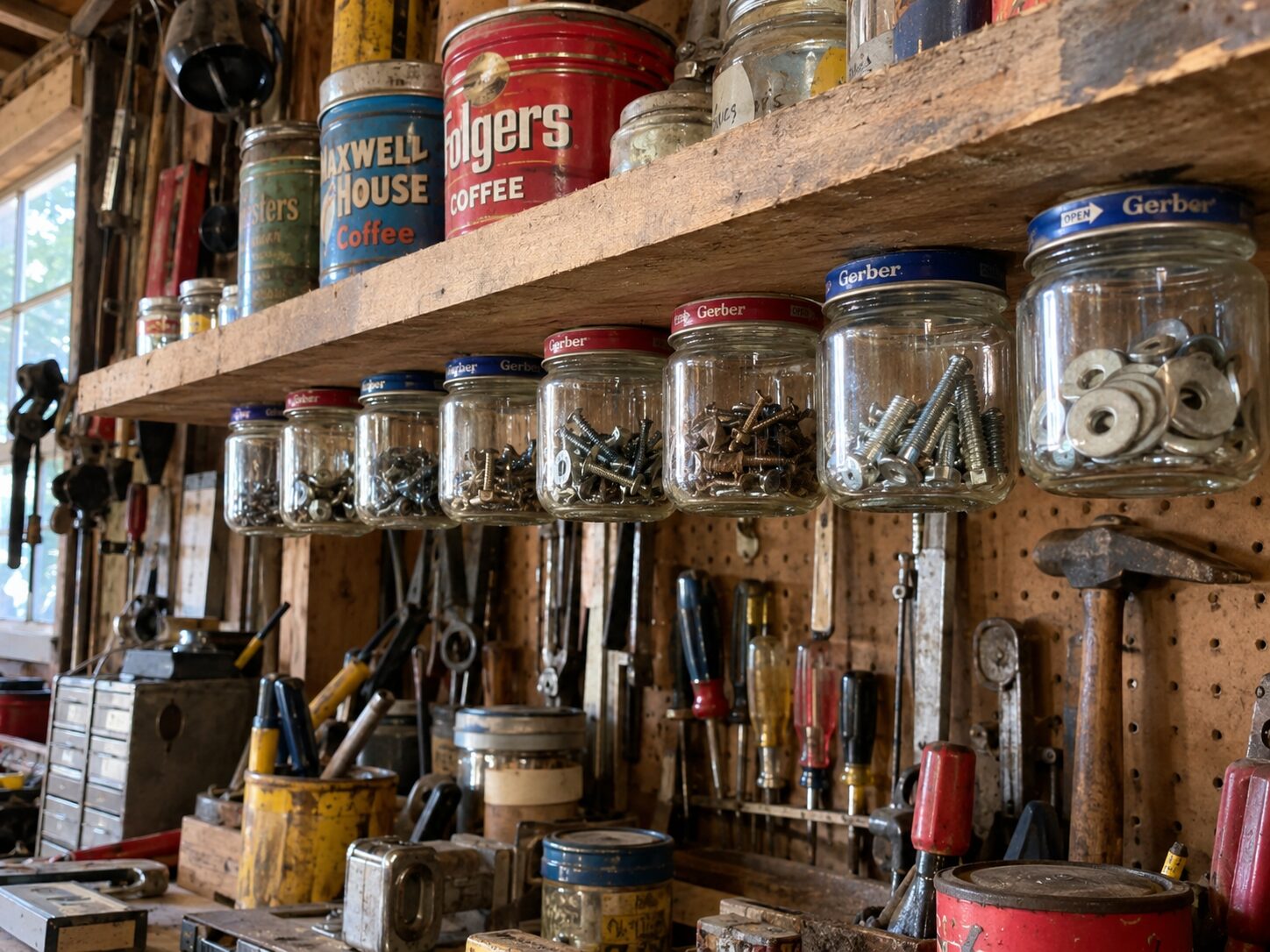
Those habits were practical for their time. And they can be hard to let go of.
That doesn’t mean every broken appliance or lid without a matching container needs to be preserved forever. But it does help to understand why a house can accumulate so much without anyone really noticing.
And then there are the things that are worth far more as memories than as merchandise.
I had an aunt, Doloris, who was my favorite aunt. When I stayed with her, we often put jigsaw puzzles together. We laughed and had such a good time. The last puzzle we ever put together had Coca-Cola and a teddy bear on it.
When I went up for my uncle’s birthday after she passed, I asked him if I could have the puzzle. I still have it. I may not ever put it together again, but it lets me feel like I have a piece of her still with me. The laughter. The memories.
To anyone else, it might look like an ordinary old puzzle. They wouldn’t know why I wanted it. When I’m gone, it may not mean anything to anyone else and will probably be thrown away. But right now, it’s mine to cherish. Or I might put it together with a grandchild and create new memories and laughter. We’ll see.
That’s something worth remembering when you’re helping clear out a house: you may not think an item matters, but it might mean the world to someone else. And unless you ask, you may never know why.
Ask the family before you make all the decisions
Before you start hauling everything away, consider inviting family members to come through and choose anything they’d like to keep.
Maybe somebody wants the old rocking chair. Someone else wants a set of dishes, a toolbox, or a photograph that has been sitting on the shelf for years. You might be surprised by what people treasure.
Better yet, if they’re willing, invite them to help sort. An afternoon of opening boxes can turn into stories about holidays, family trips and people you haven’t talked about in years. You might even learn something new about each other.
And for the people who are afraid to get rid of something because “one of the kids might want it,” this is a way to ask rather than guess.
Give everyone a fair opportunity and a reasonable deadline. When they’ve said what they want, you can make decisions about the remaining items with much less second-guessing. If you’re handling an estate or shared property, of course, make sure the people entitled to make those decisions are involved.
Before the dumpster, find out what could be sold
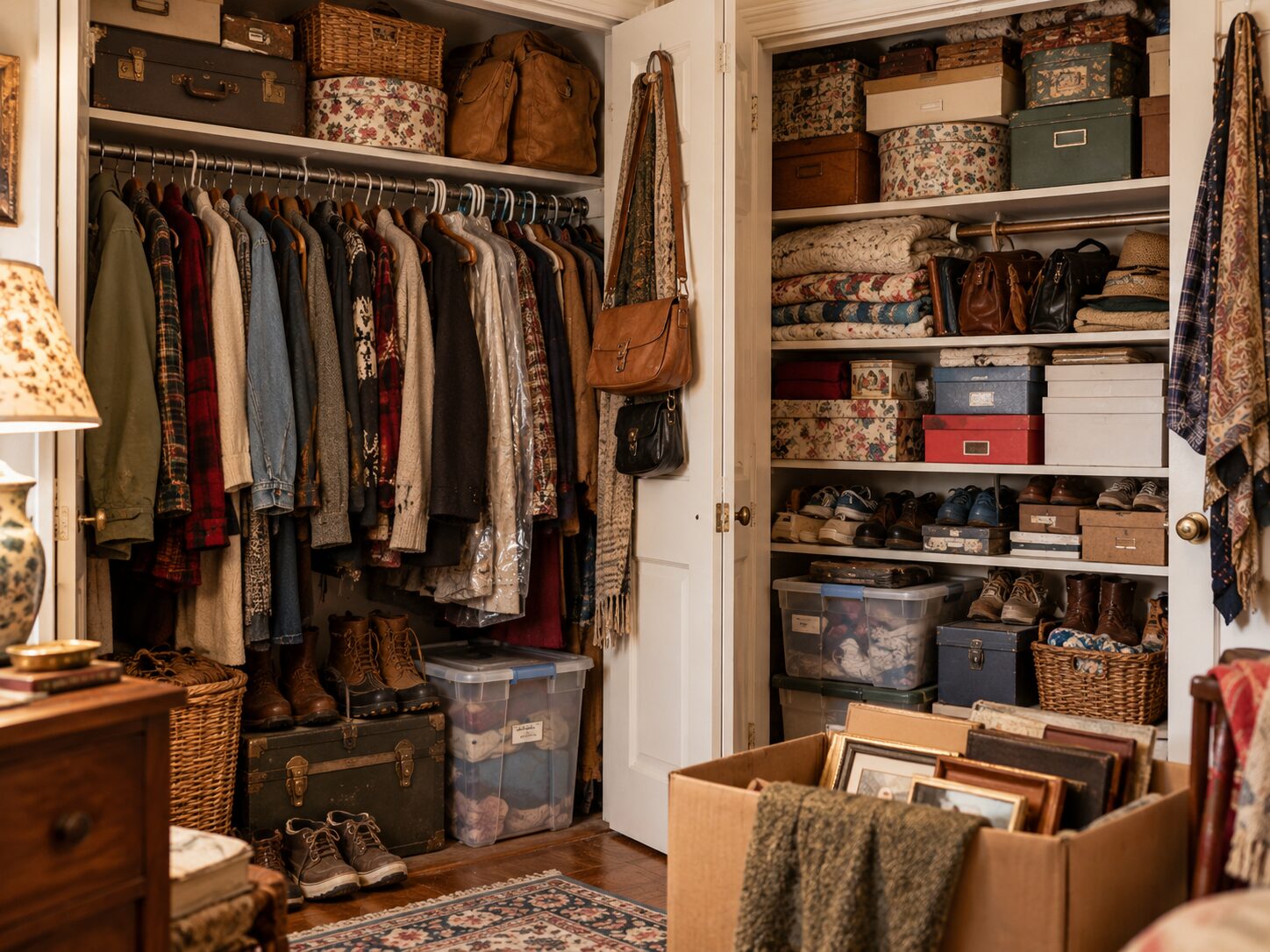
Here’s one piece of advice that surprises people: don’t assume you should empty all the cabinets and closets before calling an estate-sale company.
I worked with a family selling their stepmother’s condo. One brother and his wife did a great deal of the sorting and cleanout themselves. Afterward, they hired a local estate-sale company to sell the furniture.
The company photographed the furniture and sold it online. The brother I worked with most closely was very pleased with the experience.
But the person handling the sale mentioned something worth remembering. If more of the smaller household items had still been there, an onsite estate sale might have been an option, too. It could have brought in a little more money and saved the brother and his wife some cleanout work.
In other words, clearing out the smaller things first can sometimes limit the choices available later.
Estate-sale companies don’t all work the same way. Some organize onsite sales, some sell online, and some offer both. Their commission rates, minimums, preparation costs, credit card fees and policies for unsold belongings can differ.
I’d talk with several companies before choosing one, and ask what they would want you to leave in place. If you’d like to know which company my client used, I’m happy to share the name.
What if the family doesn’t want the furniture?
Not everything needs to be sold. Some items can be donated. Others can be recycled or removed by a hauling company. Large furniture can take more time and money to move than people expect, so ask about pickup, access and disposal fees rather than assuming somebody will come get it for free.
You also don’t have to make the entire house look like an empty model home. Whether the property is occupied, partially furnished, or already vacant affects how we prepare it for photographs and showings. There may be good reasons to leave some furniture temporarily while the rest of the cleanout happens.
Do you actually have to empty the house before selling?
Not always.
Depending on the property and the buyer, it may be possible to sell with some contents remaining. That’s something to negotiate clearly, not something to assume a buyer will accept.
A buyer who plans to renovate may have different expectations than a buyer looking for a home that’s ready to move into. And a cash buyer may be willing to take on some cleanout work in exchange for terms that make sense to both sides.
The important thing is to compare your options before spending weeks working toward a cleanout that might not even be necessary for the sale you want.
Start with a conversation, not a dumpster
If you’re getting a longtime home ready to sell around Old Hickory, Donelson, Hermitage, Madison or the Nashville area, we can talk through what really needs to happen before it goes on the market.
Sometimes the answer is a family afternoon, an estate-sale company and a hauling service. Sometimes it’s leaving the house substantially as it is and pricing accordingly. Sometimes it’s a combination.
There’s no prize for doing the most work.
And while the contents of a house may eventually be donated, sold or hauled away, the stories that come out of sorting through them are worth hanging onto.